
01 / 01
Gaskets
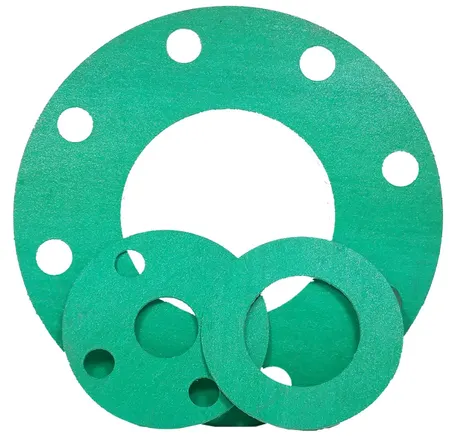
A versatile, flexible non-asbestos gasket sheet made from a blend of fibers with NBR binder and special additives. Ideal for sealing petroleum derivatives, water, saturated steam, gases, solvents, refrigerants, and general chemicals.
The Gulf Coast Glass DGNA27 Non-Asbestos Gasket is a versatile, flexible sheet made from a blend of fibers using NBR as a binder and special additives. Its uniform thickness ensures high quality in the finished product, providing flexibility that facilitates cutting and minimizes defects.
The Gulf Coast Glass DGNA27 gaskets are especially useful for sealing a wide range of substances, including petroleum derivatives, water, saturated steam, gases, aliphatic and chlorinated solvents, refrigerants and general chemicals.
Uniform and durable seal
Provides a reliable and long-lasting seal, even under the most demanding conditions, such as high temperatures and constant vibrations.
Multipurpose
Designed for versatility, these gaskets are compatible with a wide range of fluids and materials, simplifying selection and storage processes.
Inventory efficiency
Offers a multipurpose sealing solution, enabling substantial inventory reduction and optimized warehouse management.
| Non-stick | PKS67 - Inorganic |
|---|---|
| Density | 1.83 g/cm³ |
| Maximum Temperature | 400°C |
| Continuous Temperature | 210°C |
| Maximum Pressure | 100 bar |
| Compressibility | 7–15%, ASTM F36a |
| Sealability | ≤1.0 ml/h, ASTM F37 |
| Dielectric Strength | 7 kV/mm, ASTM D-149 |
| Recovery | ≥ 50%, ASTM F36a |
| Weight Gain | 14% Fuel B, ASTM F146 |
| Increase In Thickness | 12% Fuel B, ASTM F146 |
| Tensile Strength, Transverse | 12 MPa, ASTM F152 |
| Torque Retention | 34 MPa, DIN 52913 |
| Loss of Torque | 17%, ASTM F38 |
| Specific drip range | ≤0.100 mg/m·s, DIN 3535-6 |
Inspect Components:
Ensure the sight glass, flanges, and gaskets are clean and free from debris, oil, or any residue.
Check Gasket Condition:
Use new Gulf Coast Glass DGNA27 Non Asbestos Gaskets. Never reuse old gaskets, as this may compromise the seal.
Align the Gasket:
Place the gasket evenly between the sight glass and the flange. Ensure it aligns perfectly with the bolt holes and sealing surface.
Assemble Components:
Position the sight glass and flange together with the gasket in between. Insert bolts through the holes.
Tighten Bolts Gradually:
Using a torque wrench, tighten the bolts in a cross or star pattern to ensure even pressure distribution. Refer to the recommended torque values provided by the assembly manufacturer.
Inspect the Seal:
After tightening, visually inspect the assembly to ensure the gasket is properly seated and the sight glass is secure.
Perform a Pressure Test (Optional):
If required, perform a low-pressure test to verify the integrity of the seal before operating at full pressure.
Never reuse gaskets or seals. Always use a calibrated torque wrench. Not all gaskets are the same; verify their application.
Talk to our team
Contact us with your application details — pressure, media, and connections — and we will help you specify the right sight glass.