
01 / 01
Spare Parts
Polycarbonate is a group of thermoplastics that are easy to work with, mold and thermoform, and are widely used in modern manufacturing. The name “polycarbonate” is based on the fact that they are polymers that have functional groups linked by carbonate groups in a long molecular chain.
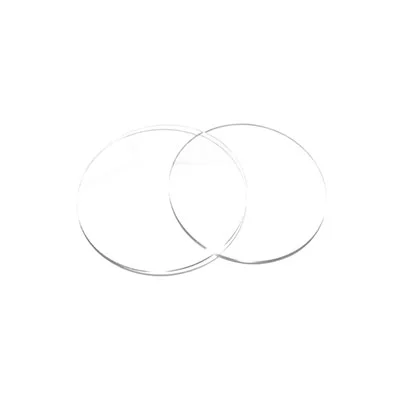
The Polycarbonate Sight Glass is an essential tool in various industries due to its durability and strength. Unlike traditional glass, polycarbonate is a thermoplastic material that offers high impact resistance and extreme temperature tolerance, making it an ideal choice for demanding industrial applications. This type of sight glass allows for clear and precise visibility of fluids and gases in closed systems, ensuring that operators can effectively monitor and control internal processes.
In addition to its strength and durability, the Polycarbonate Sight Glass stands out for its lightness and ease of installation. Polycarbonate is much lighter than glass, significantly reducing the overall weight of the equipment in which it is installed, facilitating handling and maintenance. It is especially useful in environments where safety is a priority, as polycarbonate does not shatter like glass, minimizing the risk of injury in case of breakage.
Polycarbonate is a group of thermoplastics that are easy to work with, mold and thermoform, and are widely used in modern manufacturing. The name “polycarbonate” is based on the fact that they are polymers that have functional groups linked by carbonate groups in a long molecular chain. These sight glasses are mainly used in equipment that operates at low temperatures and where safety is sought in the event of breakage due to accidental impact. They are supplied in round, rectangular, oblong, bored, conical shapes, and in thicknesses from 1/4" to 2". At Gulf Coast Glass, we offer a variety of models and sizes, adapting to the specific needs of each customer.
| Property | Testing method | Obtained value |
|---|---|---|
| Thermic dilatation coefficient | ISO 7991 | 3.3 × 10⁻⁶ |
| Density at 25°C | SN 7005 13 | 2.23 g/cm³ |
| Refractive index (λ = 587.6 nm) nd | — | 1.472 |
| Maximum annealing temperature | ISO 7884-8 | 1040 ºF |
| Short-term maximum temperature | ISO 7884-7 | 932 ºF |
| Thermal shock resistance | ISO 7884-4 | 5.67 ºF |
| Young's modulus | — | 63 150 MPa |
| Poisson constant | — | 0.2 |
| Thermal conductivity 20°C – 100°C λ | — | (1.2) (w·m⁻¹)(K⁻¹) |
| Photoelastic constant | DIN 52314 | (4.00 × 10⁻⁶) (mm²/N) |
| Specific electrical resistance 10⁸ Ωcm | DIN 52326 | 482 ºF |
| Dimensional tolerance diameter | DIN 7080 | PASS |
| Property | Testing method | Obtained value |
|---|---|---|
| Bubbles in glass | DIN 7080 | PASS |
| Marks on glass | DIN 7080 | PASS |
| Chamfer tolerance | DIN 7080 | PASS |
| Viscous knots | DIN 7080 | No visible |
| Glass inclusions | DIN 7080 | Less than 0.0078" |
We invite you to visit /contact for more information about our wide range of products. Whether you require specific details or personalized assistance, our team is here to help. We are committed to providing you with the highest quality solutions and expert guidance tailored to your needs. See the Gulf Coast Glass catalog for detailed specifications and product offerings.
Talk to our team
Contact us with your application details — pressure, media, and connections — and we will help you specify the right sight glass.